The bond market is like the pulse of the economy Can we read the collapse in the markets on the bond market on the yield curve? Can the bond market even give us an exact date?

This section gathers short essays and analysis on the global agenda—especially the changing global economic and financial order, monetary and financial transformations, and technology-driven change. Recurring topics include the evolution of the monetary system since 1971, the role of the FED and central banks, systemic fragilities, and how shocks transmit across markets.
A second pillar is digital transformation: Bitcoin and crypto-market dynamics, Web3 and DeFi, and how new infrastructures may reshape money, credit, and power. I also write about the metaverse and the broader digital economy as part of a wider techno-economic shift.
The bond market is like the pulse of the economy Can we read the collapse in the markets on the bond market on the yield curve? Can the bond market even give us an exact date?

The BIS, the Bank for International Settlements, acts as the checkpoint for today’s unlimited money-based system. It was founded in 1930 in Basel, Switzerland. It is the central bank of central banks. One of the formations within this bank is the Basel committee. The task of the Basel committee (Read “Basel 3 and Gold”) is to regulate the international banking…

One of the most important indicators that show the bubble in the stock market is the “Shiller P / E Ratio”, ie the price / earnings (also known as the CAPE ratio) used in the stock markets developed by Professor Shiller. This ratio was developed by Yale University professor Robert Shiller, who won the Nobel Prize in Economics in 2013.…

At this time while we are entering a new economic system change, the issue of what might happen in the new architecture of the economy has been frequently discussed. One of the most frequently discussed topics is the “Great Reset”, which will be discussed as one of the agendas at the World Economic Forum’s June 2021 meeting. The first step…
In order to better understand Shiller’s price / earnings (P/E) ratio, it is necessary to examine the business hours chart that should be worked in the USA in order to purchase the S&P 500. In Figure 1, we see that in the last 20 years, the lowest number of working hours was experienced during the 2009 financial crisis, with an…
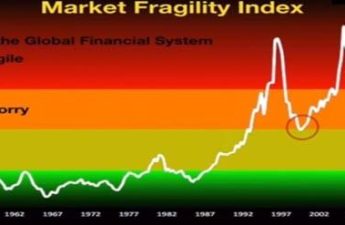
Mike Maloney blended the margin debt indicator (read: Margin Debt) with the Buffet indicator and created the “market fragility index”. While the Buffet indicator gives an idea about when the market is overvalued, the market fragility index gives information about how close it is to collapse, that is, its fragility. These two important and explanatory indicators are combined in a single…
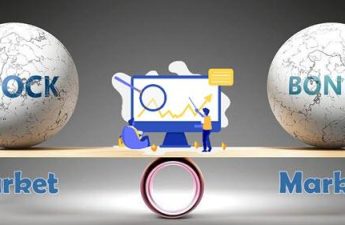
The years in which the international bond market entered a rapid expansion period are the early 1980s. The international bond market, a market for foreign currency bonds issued and traded across national borders, has played an important role in the internationalization of capital markets since 1980. After the collapse of the Bretton Woods system in 1971, floating exchange rates were…

What will the Fed’s interest rate decision be? All markets are holding their breath waiting for this decision. Expectations are in two different ways, as predicted. Some, especially the economy newspapers, are united in the opinion that the Fed will not increase interest rates. Another segment, namely, a group led by Wall Street, citing the critical increase in inflation and…