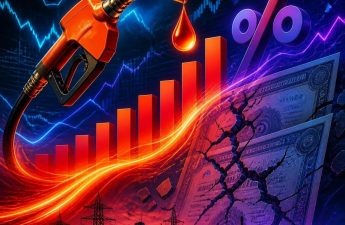
A System Built on Confidence. Confidence Is Fading.
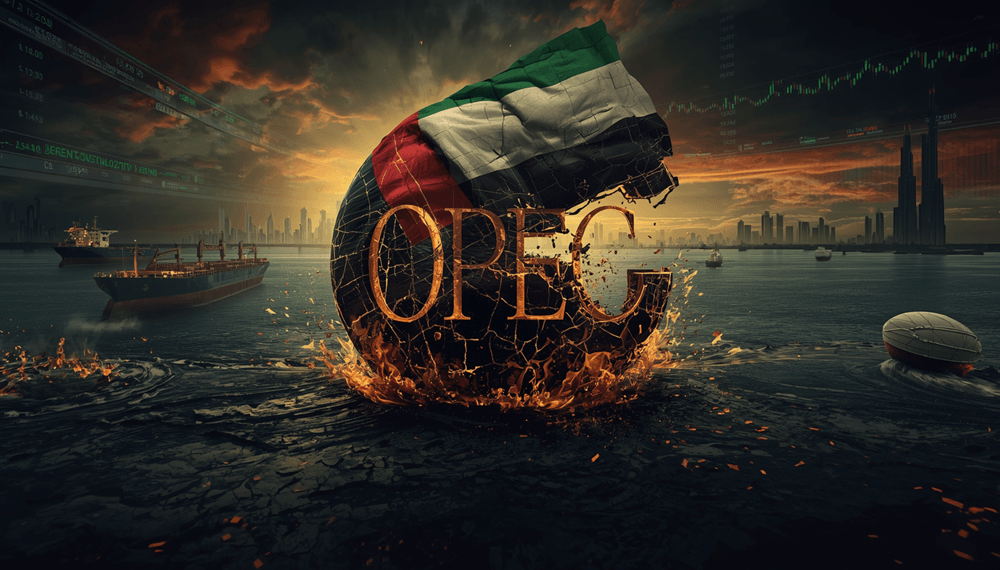
May 1, 2026 arrived quietly. No alarms. No headlines in the morning screaming that something fundamental had shifted. But on that date, the United Arab Emirates officially left OPEC and OPEC+, ending nearly 60 years of membership in a cartel that had quietly shaped global power and money since the 1970s.
This was not a negotiation. It was not a threat. It was an exit.
And it reveals something uncomfortable: the system that has financed American power and kept the world denominated in dollars is beginning to crack. Not everywhere at once. Not obviously. But in the places where you can see the machinery working, the rust is visible.
The story is simple on the surface. The UAE wanted to produce more oil. OPEC quotas prevented it. So Abu Dhabi left. Done. A business decision.
But that explanation misses the real story entirely.
The Petrodollar Pact: What It Was
Start with the architecture. In 1974, after the Arab oil embargo and the collapse of fixed exchange rates, the United States made a deal with Saudi Arabia. America would guarantee the kingdom’s security. In exchange, Saudi Arabia and other Gulf producers would price their oil in dollars and recycle their surpluses into U.S. Treasury bonds.
This was genius. Pure economic judo.
The rest of the world needed oil. Oil was priced in dollars. So the world needed dollars. Every nation had to hold dollars to buy energy. And if you held dollars, you might as well hold U.S. Treasuries too—they paid interest. The entire global system became a machine for financing American deficits and military spending.
The petrodollar system was not really about oil. It was about the ability of the United States to borrow money that nobody could refuse to accept.
For fifty years, this worked. It worked through the Soviet collapse. It worked through the 2008 financial crisis. It worked because the implicit bargain held: “We protect you. You keep the dollar flowing.”
On May 1, 2026, the UAE stopped accepting that bargain.
Why Now? Look at the Indicators
The decision to leave OPEC was not made in a vacuum. It was made against a backdrop of visible system stress.
First: The dollar’s reserve share is collapsing.**
As of Q1 2026, the dollar’s share of global official reserves fell below 57 percent—the lowest level since 1995. That is 31 years of decline compressed into the time when you were not looking.
In 2001, the dollar accounted for 72 percent of global reserves. Not anymore. Countries are no longer confident enough to hold dollars. They are buying gold instead. Central banks purchased 244 metric tons of gold in the first quarter of 2026 alone—the fastest pace in over a year, despite prices hitting record highs. Gold’s share of official reserves has risen from 13 percent in 2017 to approximately 30 percent in 2026.
This is what de-confidence looks like. When people stop trusting the currency, they buy the thing that cannot be printed. They buy gold.
Second: The Strait of Hormuz is no longer reliable.**
One-fifth of the world’s oil passes through this waterway. It is only about 30 miles wide. And since February 2026, Iran has blockaded it. Oil is still moving, but barely. Insurance premiums on tanker transit have surged 300 to 500 percent. The economics have flipped. It is cheaper to reroute oil around Africa than to pay the war insurance.
The UAE has a pipeline that bypasses the Strait—the Fujairah pipeline can move 2 million barrels per day directly to the Arabian Sea. The UAE does not need OPEC’s collective bargaining. It can go around.
But more importantly: the UAE watched its security guarantor struggle to handle the crisis. The United States is fighting in the Middle East, but it is not winning the energy war. The blockade has persisted for months. Oil prices are elevated. The gulf monarchies are receiving fewer dollars.
Third: The world is settling trade in other currencies.**
Saudi Arabia expired its exclusivity agreement with the United States in June 2024. Now it accepts yuan, euros, and even digital currencies. Iran is collecting transit tolls in yuan. Russian oil is flowing to China in a “dark fleet” that operates outside SWIFT, settled in Project mBridge—a blockchain-based platform for central bank digital currencies that handled over $55 billion in March 2026 alone.
The petroyuan is not theoretical anymore. It is operational.
Fourth: OPEC itself had become dysfunctional.**
Iraq overproduced its quota. Venezuela faced sanctions and could not produce. Kazakhstan cheated constantly. Meanwhile, the UAE had built spare capacity and was forced to keep it idle—like owning a factory ordered to produce nothing while the world needed the goods.
The cartel had become a cage.
The Real Break: Sovereignty Over Submission
The UAE’s departure was announced in neutral language. “National interests.” “Strategic vision.” “Commitment to market stability.”
But the interviews told the real story.
UAE analyst Abdulkhaleq Abdulla was blunt: OPEC “now bears little resemblance to the cartel the UAE joined decades ago.” He said the system was being “steered by its largest producers” to “advance their own interests at the expense of others.”
He was talking about Saudi Arabia. And Russia.
The petrodollar system worked when there was a hegemon that could enforce it. The United States. But the hegemon is now contested. China is moving. Russia has alternatives. The Gulf states have watched the U.S. struggle with Iran, watched inflation at home, watched the dollar weaken, and they have begun to ask: *Why do we need this deal?*
The UAE’s exit is the first public answer.
It is not that Abu Dhabi rejected oil sales in dollars. It is that Abu Dhabi rejected OPEC. It rejected the constraint. It rejected subordination to Saudi Arabia’s vision of what the cartel should be. It rejected the implicit deal that petrodollar recycling requires: that producers *accept lower prices in exchange for security guarantees.*
The security guarantees are not credible anymore. The prices are not high enough. The constraints are not worth it.
The Cascade Risk
The UAE was OPEC’s third-largest producer. It controlled meaningful spare capacity. It was disciplined—it actually followed its quotas, unlike other members.
When the UAE leaves, it sends a signal to every other producer with ambitions: *You can leave too.*
Analysts already identify Kazakhstan, Nigeria, and Venezuela as potential “flight risks.” Not because they share the UAE’s sovereign wealth. But because they share its impatience with quotas.
If more major producers leave, OPEC’s entire raison d’être collapses. A cartel only works if it can coordinate supply. Without coordination, it is just separate oil companies competing. And competitive oil markets are good for consumers but terrible for petrodollar recycling.
Which is precisely the point.
The Deeper Unraveling: The Petrodollar Dies When Countries Stop Needing It
Here is the mechanism that economists miss.
The petrodollar system requires that oil-producing nations *accumulate dollars faster than they can spend them*. They get paid in dollars, but they do not consume American goods. So they invest in Treasuries. Treasuries require a buyer. The buyer is the oil producer. It is a closed loop.
But the loop breaks if:
- Oil producers diversify their holdings (they are) 2. They buy gold instead of Treasuries (they are) 3. They use alternative payment systems (they are, through mBridge and CIPS) 4. The U.S. stops guaranteeing their security (increasingly they doubt this) 5. They decide they can monetize their reserves before the world stops buying oil (the UAE just announced this)
All five conditions are now true in May 2026.
The Fed can raise rates. The Treasury can issue more bonds. But if oil-producing nations decide they would rather own gold, physical infrastructure, and yuan, no amount of Treasury supply will matter. The petrodollar does not die in a day. It dies as confidence erodes. One country leaves the cartel. Then another. Then central banks stop holding Treasuries. Then the dollar weakens. Then borrowing costs rise. Then the entire fiscal house of cards starts to shake.
This is not a prediction. This is what is already happening.
What Comes Next
The UAE did not announce an alternative system. It simply walked away.
But the structure is visible now. BRICS is building payment corridors that bypass the dollar. China is offering petroyuan. Russia is accepting gold and alternative currency mixes. Central banks are buying gold at record pace. Energy producers are diversifying.
The world is building a new architecture. It is not a single new currency. It is not a gold standard. It is something more complex: multiple regional systems, some dollar-based, some not. Some settled in gold. Some in blockchain-based central bank digital currencies. Some in trade credits and bilateral swap arrangements.
It is a multipolar financial world.
And it emerged the moment a major oil producer realized that staying in the old system cost more than leaving it.
The Symmetry
There is a symmetry in history that is hard to miss.
In 1971, the United States closed the gold window. President Nixon said America would no longer redeem dollars for gold. The world was shocked. The fixed exchange rate system collapsed. The petrodollar rose from the ashes.
In May 2026, the UAE closed its door to OPEC. It said the cartel would no longer constrain its production. The world barely noticed. OPEC will survive, at least on paper. But its capacity to shape global oil markets is diminished.
What emerges from both disruptions is the same insight: systems based on confidence are fragile. They seem eternal until they are not. The petrodollar seemed like it would last forever. Now it is a relic being managed in its final decade.
The currency did not fail. The system did.
A Final Thought
Money is not objective. It is not backed by atoms of value hidden in Fort Knox. It is backed by *everyone’s belief that everyone else believes*. It is a coordination game. A confidence game.
When oil producers stop believing that the system benefits them, the game is over. Not immediately. Not catastrophically. But irreversibly.
The UAE’s exit from OPEC on May 1, 2026 was a small decision with large consequences. It was one country saying: “We are taking a different path.”
But when confidence erodes, one decision becomes a signal. Then a precedent. Then a stampede.
The petrodollar pact assumed permanent power and permanent utility. On May 1, it became clear neither assumption holds.
GLOSSARY
OPEC: ** The Organization of the Petroleum Exporting Countries. A group of 12 oil-producing nations (now 11 after UAE exit) that coordinate oil production and pricing. Think of it as a union of oil sellers trying to keep prices high by controlling how much they produce.
Petrodollar: ** The system where oil is priced in U.S. dollars and oil producers recycle their revenues into American Treasury bonds. This created global demand for dollars and allowed the U.S. to borrow cheaply. Like a restaurant where everyone pays in the owner’s personal vouchers—the owner can issue as many vouchers as needed because everyone needs them to eat.
OPEC+: ** OPEC plus other oil-producing nations (like Russia) that coordinate together. A larger cartel than OPEC alone.
Quotas: ** Production limits that OPEC assigns to each member. Like telling a factory “you can only make 100 cars per month” so that overall supply stays constrained and prices stay high.
De-dollarization: ** The process of reducing reliance on the U.S. dollar for international trade and holding reserves. Countries buying gold, euros, yuan, or other currencies instead of dollars. Like slowly moving your money out of one bank and spreading it across many others.
BRICS Payment System: ** A system being built by Brazil, Russia, India, China, and South Africa to allow trade without using SWIFT or the dollar. Think of it as a parallel banking network not controlled by the U.S. or its allies.
Petrodollar Collapse: ** When the system breaks because oil producers no longer want to recycle their earnings into U.S. Treasuries. This would raise U.S. borrowing costs and weaken the dollar’s global dominance.
Sovereign Wealth Fund: ** A large pool of investment money owned by a government. The UAE has over $1.7 trillion in sovereign wealth—money to invest globally, not just in oil.
Petroyuan: ** Oil priced and paid for in Chinese yuan instead of dollars. China’s attempt to make its currency a global reserve currency by letting other nations use it for energy trade.
SOURCES
- Reuters, April 28-29, 2026. “UAE to Exit OPEC and OPEC+ on May 1, 2026” 2. CNBC, April 28, 2026. “UAE Leaves OPEC During Iran War” 3. Al Jazeera, April 28-29, 2026. “UAE Leaves OPEC: What It Means for Oil Markets” 4. Gulf News, April 28, 2026. “Why Did UAE Decide to Exit OPEC” 5. Bloomberg, April 28, 2026. “UAE to Leave OPEC in May as Iran War Reshapes Oil Market” 6. Atlantic Council, May 1, 2026. “A Long Time Coming: Understanding the UAE’s OPEC Exit” 7. Fortune, May 2-6, 2026. “De-dollarization Accelerates; Dollar Share of Reserves at 25-Year Low” 8. NPR, May 6, 2026. “How the Petrodollar Regime Came to Be and What Losing It Would Mean” 9. The Friday Times, March 18, 2026. “The Fall of the Petrodollar and the Rise of a Multipolar World” 10. World Gold Council, April 2026. “Gold Purchases by Central Banks Reach Fastest Pace in Over a Year”
ANALYTICAL NOTE
Verified Facts in This Article: ** – UAE officially left OPEC and OPEC+ on May 1, 2026 (confirmed by official UAE government statements and international media) – The dollar’s share of global reserves fell below 57% in Q1 2026, the lowest since 1995 (IMF COFER data) – Central banks purchased 244 metric tons of gold in Q1 2026 (World Gold Council) – Gold’s share of official reserves rose from 13% (2017) to approximately 30% (2026) (World Gold Council) – The Strait of Hormuz has been blockaded since February 2026 (international shipping reports) – UAE has a pipeline (Fujairah) bypassing the Strait with 2 million bpd capacity (UAE Energy Ministry) – Saudi Arabia’s exclusivity agreement with the U.S. expired in June 2024 (historical record) – Project mBridge handled over $55 billion in trade in March 2026 (central bank reports)
Interpretive Lens Applied: ** – Framing the UAE exit as a loss of confidence in the petrodollar system, not merely an energy policy decision – Using Hamza Yardımcıoğlu’s analytical framework: system stress, state panic, institutional breakdown – Using Michael Maloney’s framework: erosion of currency confidence, return to gold as “real money,” weakening fiat systems – Treating the petrodollar not as eternal but as a 50-year system entering its final phase – Connecting UAE’s departure to broader de-dollarization and multipolar financial architecture
Cautious Scenarios Discussed (not presented as certainties): ** – Other major OPEC producers may leave (Kazakhstan, Nigeria, Venezuela identified as risks) – Oil may be increasingly priced in non-dollar currencies – Central bank Treasury holdings may continue declining, pressuring U.S. borrowing costs – The multipolar financial system may harden as alternative payment corridors deepen